Covering couples football stadiums all over the world

Showing posts with label Magazines. Show all posts
Friday, November 16, 2012

Football Monthly (November 1983)

The perm or the straight-cut?  This was the question perplexing grown-up kids and young adults alike in February 1983 when they bought the latest issue of Football Monthly.

The subject, Bryan Robson, was seen on the front cover and on page two, the latter being an advert for New Balance boots. The Manchester United and England star claimed he’d helped the company to “shape, test and refine” their boots under every possible playing condition - “including World Cup competition.” Judging by the picture on page one, he’d had also had a similar involvement with the production of hair-straightening equipment too.


But let’s not be distracted for Football Monthly wasn’t all about the hairstyles of injury-prone internationals. It concerned itself with hard facts and copious statistics, and this was proven in the ‘Transfer Market’ feature on page five. Here we get an interesting snapshot of who was moving where 29 years ago.

Charlie Nicholas was top of the list, moving from Celtic to Arsenal for £750,000, but many other well known names were also changing clubs. Kerry Dixon had moved from Reading to Chelsea for a bargain £175,000 while in the sub-£30,000 bracket Sam Allardyce switched from Millwall to Coventry and Gerry Francis moved from Coventry to Exeter. There’s also an ‘R Savage’ leaving Liverpool for Stoke. Surely he’s not *that* old, is he?

Despite qualifying for the 1982 World Cup, England were struggling to qualify for the 1984 European Championships and this issue of Football Monthly was ruthless in its review of England’s recent games. When Bobby Robson’s men were defeated 1-0 by Denmark, the magazine claimed this was “without doubt England’s worst-ever performance at Wembley”. It went on to say “Apart, possibly, from the 1950 World Cup defeat at the hands of the USA, this was England’s most inept display in 111 years of international conflict.”

A look at the magazine’s Formscope scorecard, however, gave a different view. Peter Shilton was rated “7 out of 10 - Good”, Phil Neal “8 out of 10 - Very good”, Russell Osman “7 out of 10 - Good” and so it went on. Every player scored either 7 or 8 out of 10 with the exception of John Gregory (6) and Paul Mariner (5). A little confusing, to say the least...

Football Monthly was on safer ground when, for no explainable reason, they listed all 92 league club managers from Division One to Division Four. Unordinary though it may seem on the surface, it actually provides an interesting view of the experienced and not so experienced men in charge of their teams back then.

In Division One, Larry Lloyd was manager Notts County - just across the city from his old boss, Brian Clough at Nottingham Forest. Clough’s old partner Peter Taylor, meanwhile, was in charge at Second Division Derby County while elsewhere in the division, two former Leeds players - Norman Hunter and Eddie Gray - were learning the ropes at Barnsley and Leeds respectively.

One manager doing rather well was Terry Venables. Having guided QPR into Division One, he’d overseen the introduction of the Omniturf pitch at Loftus Road and, at the time of publication, was putting together a consortium to buy the club outright. All things considered, Venables was the recipient of much praise having seen his team into the FA Cup Final of 1982, a feat made possible thanks to some diligent purchasing. The record-breaking sale of Phil Parkes to West Ham had freed up lots of cash, and the former Crystal Palace manager spent it well on some decent players.

A mixture of flair, experience and youth was undoubtedly the hallmark of Venables’ side. Along wth old stagers Bob Hazell and Terry Fenwick, Mike Flanagan and Clive Allen had arrived from Palace like Venables himself. Utility player John Gregory was playing well enough to break into the England team (as we’ve already heard) and with the likes of Ian Dawes, Gary Waddock and Peter Hucker in goal, QPR clearly had all the talent they needed to eventually finish the 1983/84 season in fifth place. “The First Division is going to have more to worry about than just a plastic pitch” claimed Football Monthly, and with some justification.

Other articles in this issue included ‘Ron’s Reds Poised To Take The Title’ in which Man United’s Ron Atkinson was “quietly confident” of his side winning the title (they’d finish fourth) and ‘Ipswich Are Standing At The Crossroads’ in which the Portman Road club were assessed in the light of so many key players leaving (they’d finish 12th). In many ways, though, Football Weekly leaned heavily on the tried and trusted features of similar publications that were available at the time.

The centre pages featured a colour team picture of Manchester United in the style of Shoot! while at the back was ‘Scoreline’, a three-page statistical reference containing recent results, scorers and attendance figures as per World Soccer. There was even a ‘Classified Page’ containing the ubiquitous ad from Steve Earl Football Programmes to make you think you were thumbing through Match magazine.

All in all, then, Football Monthly appeared to be a publication of some distinction due to its lengthy no-frills articles and factual information. Clearly it was pitched at the youngsters that considered themselves a little too old for Shoot’s glossy colour pictures and easily digestible text, but seemingly there was a gap in the market for just such a title. It appeared in newsagents right the way through the 1980’s and despite its slightly cock-eyed England match reports, it rightly became a trusted source of football reporting throughout.
You have read this article 1983 / Bryan Robson / England / Football Monthly / Magazines / QPR / Terry Venables with the title Magazines. You can bookmark this page URL https://couplesfootballstadium.blogspot.com/2012/11/football-monthly-november-1983.html. Thanks!
Saturday, October 6, 2012

Goal magazine, 10 August 1968

There is, I suspect, a number of people for whom the phrase ‘incorporating Goal magazine’ is the source of much confusion. Appearing below the main title of Shoot! back in the mid-1970s, those three simple words rattled around inside my own mind until recently. What was Goal magazine and why was its existence being compromised? As ever, the trail of nostalgia generated by decades of football fanaticism was there to provide all the answers.


‘The World’s Greatest Soccer Weekly’ was how Goal proudly announced itself on 10 August 1968. With its bright red cover, circular picture of Emlyn Hughes and George Best battling for a muddy ball and the potential to ‘win £2,000 free,’ the first issue must have stood out a mile on the shelves of newsagents up and down the UK.

Goal wasn’t short of a swagger when it hit the newsstands. Following a high-profile launch at London’s Savoy Hotel (complete with dolly birds, no less), readers found the first edition proclaiming its self-assuredness at every opportunity. The first two pages proved this with several warm wishes from football notables including Sir Stanley Rous and Bobby Moore, plus the first of many articles from star writer Bobby Charlton.

Charlton’s Manchester United side were European Cup champions, but they’d lost their league title to Man City at the end of the 1967/68 season. It was therefore ironic that United faced City in the first eight days of the new season, not to mention West Brom and Everton, both of whom had featured in the 1968 FA Cup Final. The England international midfielder accepted this as an anomaly of the fixture computer but wondered if Don Revie and Bill Shankly could have come up with a worse start for United. Remember, this was an era when fixture computers were (a) new technology, and (b) beyond the realms of suspicious human manipulation. Innocent times.

Bobby Charlton was quick to pick out Everton as a rising force in the English game, as was reporter Alan Hughes. Fulham, however, seemed braced for the departure of Johnny Haynes, their mercurial forward who, at 32, was nearing the end of his career. Goal speculated that QPR were preparing a bid for Haynes after their young striker Rodney Marsh had suffered an injury. As things turned out, Haynes received his testimonial at Fulham and stayed until 1970, while Marsh remained at QPR until 1972 when Man City came calling.

The sinister threat of football hooliganism was also reported in the first issue of Goal. A recent friendly between Arsenal and Rangers had resulted in thousands of teenagers invading the pitch where running battles ensued. The game was abandoned as 24 people were treated for injuries and a further 26 were arrested. A similarly violent coming together of fans in Buenos Aires resulted in over 70 people being killed during June of 1968, and reporter Peter Barnard was quick to suggest that those involved in football thuggery be heavily fined or even banned from grounds for life.

It wasn’t just the external threats to football that made the Goal headlines. Internally, the laws of the game itself appeared to be restricting fans’ enjoyment too, according to Eric Nicholls. He argued that the tackle from behind needed to be punished more severely and that the rule-makers should concentrate on that rather than the goalkeeper’s ‘four-step’ law which seemed ‘potty’ and unfairly restricted the men between the posts. Nicholls (and many others) would have to wait decades before a straight red card could be awarded for a dangerous tackle from behind.

Elsewhere in Goal, there were numerous snippets of news that highlighted the careers of well-known players before they were famous. In ‘On The Ball’, we heard that Bruce Rioch (future star of Everton and Scotland) was “not likely to leave [Fourth Division] Luton yet awhile” but added that “the club are turning down offers for him weekly.” Within a year, Rioch had moved to Aston Villa in a £100,000 transfer that broke the record for a Second Division club. Colin Todd, meanwhile, was staying put at Sunderland after the Roker Park club named him vice-captain. An England under-23 international at the time, Todd eventually signed for Derby County in 1971 and was also a record-breaker – his £150,000 signing-on fee being the highest for a British defender at the time.

Like Shoot! (the magazine that eventually swallowed up Goal), there was a two-page colour centre-spread, in this issue featuring a Liverpool team that could have been sponsored by Adidas if the players’ boots were anything to go by. In another full-page colour picture featuring Trevor Brooking, his fellow West Ham team mates were referring to him as being potentially “the greatest discovery we've ever made.” Whatever happened to him, I wonder?

As is often the case, however, the nicest part of an old football magazine like this is the back section where adverts and small features catch the eye. Here in issue 1 of Goal we find all manner of different ads offering everything from baldness remedies to  home studies helping you play the guitar in three weeks. There’s even an advert for Maserati Air Horns – “the famous Italian horns noted for their penetrating blast!”  Next time you watch old footage from a World Cup match in the 1970’s or early 80’s, you’ll know what’s causing all the noise…

Finally (and somewhat surprisingly for a football magazine aimed mainly at young fans), may column inches were dedicated to the art of winning the Football Pools including a weekly guide by Jack Potts, second only to Andy Capp in the Silliest Names of 1968 contest. If you wanted to win over £43,000 like four lucky Lymington dustmen, it was vital to know where to mark your X’s and luckily Goal was on hand to provide copious amounts of help.

Sadly it was a similar generation of revenue that ultimately proved Goal’s undoing. Having reached a peak circulation of 220,000 in 1971, sales of the magazine started to drop steadily and in June 1974 the decision was made to merge the title into Shoot!  With it, a well-known title virtually disappeared from our newsagents, but its concerted efforts to provide some decent weekly football reporting for us all to read fortunately remain to this day.
You have read this article 1968 / Bobby Charlton / Goal magazine / Magazines with the title Magazines. You can bookmark this page URL https://couplesfootballstadium.blogspot.com/2012/10/goal-magazine-10-august-1968.html. Thanks!
Tuesday, July 31, 2012

Radio Times: 1986 World Cup preview issue

For the vast majority of us not able to visit the 1986 World Cup in Mexico personally, the Radio Times did a pretty good job of making you feel like you were actually there. Every possible detail about the build-up to the competition, the British teams involved and the climactic challenges awaiting them was covered comprehensively.

Jimmy Hill’s opening gambit, ‘Here we go!’ prepared us for a slower, more skilful brand of football better suited to the heat and altitude of Mexico. Luckily for Bobby Robson, Hill pondered, England “couldn’t be in a better group if they had applied for it.” It’s a shame that Portugal, Poland and Morocco didn’t end up sharing the BBC man’s sense of logic in the fullness of time.

In ‘Viva Mexico!’ Barry Davies looked at the creeping invasion of commercialism into the World Cup in contrast to the abject poverty of many of Mexico City’s inhabitants. In the wake of a crippling magnitude 8 earthquake the previous September, the Mexican capital was trying to rebuild and create the infrastructure for a successful World Cup. Uppermost in the minds of many, however, were the people that had died and the ongoing destitution they themselves were living in.

“The hoardings of the 12 official sponsors gained by FIFA’s agents, ISL Marketing, were at first slow to appear. Now they look down from every corner and surround the playing areas of the 12 venues” claimed Davies. Of the poor in the city, he said: “It would be nice to think that the World Cup will offer them – the people in the street – long-term gain and not just a passing lift to morale. But history may support the doubters.”

The hotels and base camps awaiting the squads of England, Scotland and Northern Ireland were detailed in ‘A place in the sun.’ While the Mexican heat provided a universal problem for all northern European teams to cope with, Monterrey served up another for the England team. At only 522 metres, it had the lowest altitude of all the venues, and what’s more it was only “designed for the overnight traveller or for a weekend away.” Nice.

Northern Ireland, meanwhile, were "living in style" at their hotel not far from Guadalajara, scene of England's classic encounter with Brazil in 1970. "Every possible sporting diversion is on offer from tennis to horse riding, baccarat to a golf driving range, with four nearby courses open to guests. There is even a bullring" we were told. But which of the hotel's useful facilities did the Northern Ireland squad make most use of? "As for the swimming pool" the article went on "it is one of those where crawling to the bar – freestyle fashion – is quite acceptable."  Question answered.

Acclimatisation to the heat was discussed further in ‘Soccer at the highest level’ where, according to Byron Butler, “the lessons of 1970 have been digested.” As part of the medical preparations the England party took 20,000 pills with them across the Atlantic – enough “to make Bryan Robson and the team rattle.” As if dehydration and a lack of the appropriate medication wasn’t bad enough, there was also ‘the Aztec two-step’ to consider – “a mixture of diarrhoea, nausea, abdominal pain and fever” better known to many as ‘Montezuma’s Revenge.’ Never let it be said it’s an easy life being a footballer.

John Motson, Des Lynam and Bob Wilson were on hand to give their views on the chances of England, Northern Ireland and Scotland respectively. According to the former Arsenal goalkeeper, Scotland’s place in the ‘Group of Death’ with West Germany, Denmark and Uruguay was no bad thing given their propensity for failing at the hands of minnows down the years. With Graeme Sharp of Everton up front with “West Ham’s 28-goal scoring sensation Frank McAvennie,” they could hardly lose, yet lose they did in two of their three games to end their Mexican campaign earlier than planned.

Page after page of team profiles were also provided in this edition of the Radio Times, all written by great figures from the British game including Ron Greenwood, Emlyn Hughes, Terry Venables and Bobby Charlton. And if that 24 pages of World Cup content wasn’t enough, you still had the job of building your viewing schedule for the week ahead.

World Cup Grandstand was where the BBC’s coverage began at 6.10 pm on Saturday 31 May. Italy v Bulgaria and the opening ceremony were featured in the first programme, preceded as it was by The Keith Harris Show and a re-run of Whatever Happened to The Likely Lads? From Day 2 onwards, live matches were broadcast at an altogether less sociable hour of the day, usually from 10.50pm, with highlights shown at around 5.30pm when ITV had live coverage.

And what other televisual delights were on offer throughout this momentous week on the BBC?  Well for children there was The Kids of Degrassi Street, John Craven’s Newsround, We Are The Champions and Dogtanian and the Three Muskehounds. For older viewers there was a choice of viewing including Les and Dustin’s Laughter Show, M*A*S*H and Terry and June. Yes, it was entertainment all the way during the first week of June 1986… but mostly on the pitch rather than off it.
You have read this article 1986 / Magazines / Mexico 86 / Radio Times with the title Magazines. You can bookmark this page URL https://couplesfootballstadium.blogspot.com/2012/07/radio-times-1986-world-cup-preview-issue.html. Thanks!
Friday, May 18, 2012

World Soccer: June 1983

SV Hamburg: champions of Europe. That statement might jar your sense of reality unless you transport yourself back to June 1983 when World Soccer reported on the European Cup Final.

The reigning Bundesliga titleholders had out-thought and outplayed their opponents, Juventus, to win 1-0 in Athens, the only goal of the game scored by current Wolfsburg manager Felix Magath. Keir Radnedge described in detail how the Italian outfit had been found wanting in the grand finale, not helped by the new signings brought in to improve the Turin club.

“One year ago, their midfield was the best organised in Calcio” said Radnedge, yet Liam Brady had been ousted from the team in favour of Michel Platini and Zbigniew Boniek -  initially to little effect. The two stars of the 1982 World Cup struggled to adapt to life at the Stadio Comunale and were soon campaigning for a change in team tactics. Though that would ultimately reap its rewards, the 1983 European Cup Final arrived too soon for them to play at their best as Juventus were silenced by the managerial brain of Hamburg boss Ernst Happel.

Happel, leader of the Dutch side that almost reached the 1978 World Cup semi-finals, overcame the absence of one or two key players to create a masterplan which frustrated the Turin side. Players such as Jürgen Milewski, Horst Hrubesch and Wolfgang Rolff were allowed the space and freedom to switch positions, run at the Juventus defence and generally cause panic while their opponents stuck rigidly to their positional setup.


Radnedge summed up the Italians’ enforced tactical inferiority concisely: “Magath’s early goal meant that for Juventus the age-old Italian tactic of defend and strike on the counter-attack was useless. They had to come forward, and they didn’t seem to know how.”

The Road to Mexico

Sharing the opening page of World Soccer in June 1983 was the news that FIFA had unanimously chosen Mexico as hosts of the 1986 World Cup Finals. FIFA had originally given the hosting rights to Colombia as far back as 1974, but the South American country had stepped down in 1982, admitting they couldn't afford to stage the event.

Mexico ultimately won the bid to be the 1986 hosts when the world governing body’s executive committee met in Stockholm. Canada and the United States had also submitted bids, the latter ruffling a few feathers by enlisting Pele, Henry Kissinger and Franz Beckenbauer for their presentation.

As it is, FIFA president Joao Havelange needed little persuasion in awarding Mexico its second World Cup Finals, but some were surprised. The Brazilian had seen fit to only send an investigative commission to Mexico, dismissing the other two bids without further consideration. “Canada and the United States failed to reply to some important questions” said Havelange. “We could not keep on postponing the decision.”

Brian Glanville, writing in his column on page 20, was outraged for different reasons. He believed the 1986 World Cup should have gone to Brazil. Glanville felt that a Brazilian bid was doomed to fail because of the inharmonious relationship between Havelange and Giulite Coutinho, president of the Brazilian Soccer Confederation. He cited Don Balon who claimed the FIFA president had allegedly made a trip to Mexico City in the private jet of Emilio Azcárraga Milmo, millionaire chief executive of the TV chain Televisa. Hardly conclusive proof of underhandedness, but worth thinking about, claimed Glanville.

Club clash

Elsewhere in his column, Brian Glanville commented on Robert Maxwell’s on-going attempts to merge Oxford United and Reading into a new club, Thames Valley Royals. Glanville stood with both feet firmly in the anti-merger camp, saying “At the time of writing, it appeared the opposition to the merger had but modest chance of success, but I must say I wish it no success at all.”

Assessing Maxwell’s motives for combining the two clubs at a new location in Didcot, he went on to say: “When did families, per se, ever go to watch a game en masse in Britain? And why should they start now, just because Robert Maxwell dumps a leisure centre in the middle of the Thames Valley, with its egregious population of 1.8 million?”

Both sets of fans made their opinions known in the form of protests, while Maxwell threatened to close down Oxford United if the merger didn’t go ahead. It’s just as well he didn’t: Oxford United won the Division Three championship the following season, reached Division One in 1985 and would have played in the UEFA Cup in the 1986/87 season were it not for the ‘Heysel’ ban on English clubs in European competition.

Finals galore

As well as the European Cup, the finals of the European Cup-Winners’ Cup, the UEFA Cup and the FA Cup also featured heavily in this issue. For Alex Ferguson, there was the chance to bask in the glory of a 2-1 extra time win over Real Madrid in the Cup-Winners’ Cup Final.

On a bleak, rain-soaked night in Gothenburg, Eric Black and John Hewitt scored the goals to maintain a seventh consecutive season in which a British team had won a European trophy. “This is the greatest moment of my life” said Ferguson. “It was a magnificent performance in the conditions and I thought we thoroughly deserved victory.”

The two-legged UEFA Cup Final was won by Anderlecht, 2-1 on aggregate over Sven-Göran Eriksson’s Benfica. The Belgian side had become a force to be reckoned with in European football, appearing in the European Cup-Winners’ Cup Finals of 1976, 1977 and 1978, winning the first and last of those. Here, under the managerial leadership of legendary Belgian midfielder Paul Van Himst, they travelled to the second leg in Lisbon with a 1-0 lead from the first match in Brussels.

Though Benfica scored first through a 32nd-minute goal by Han Shéu, they relaxed too much, allowing Anderlecht to score a valuable equaliser six minutes later through Juan Lozano. The goal appeared to knock the wind out of Benfica’s sails, thus allowing the Belgians to comfortably stay on top in the second half and finally win the trophy.

On the domestic front, Manchester United needed a replay to overcome Brighton and Hove Albion in the FA Cup Final having drawn 2-2 at the first time of asking.

In the second match five days later, Brighton played well for the first 25 minutes before United struck four times – twice through Bryan Robson – to seal the victory. It was Man United’s first major success for six years and, as Paul Parish reported, spectators “would have fonder memories of Wembley’s excitement than the slide-rule boredom produced in Athens [in the European Cup Final].”


England hosts UEFA U-18 tournament

Staying on English soil, Keir Radnedge reported on a French victory over Czechoslovakia in the UEFA European Youth Championship Final held at White Hart Lane. World Soccer’s Associate Editor explained how the FA had made a bad job of organising the event, attracting only 30,000 spectators in total across the 28 matches. “In West Germany and Switzerland in the past” said Radnedge, “large crowds have been roped in by the simple expedient of giving away thousands of free tickets in local schools.” Not here and not back then, as it turned out, although the FA would soon catch on in a bid to fill Wembley Stadium more often in future.

Graham Taylor’s England side eventually finished third in the tournament, beating Italy 4-2 on penalties at Watford’s Vicarage Road ground. Taylor felt that the Italians were the best side in the tournament, but Keir Radnedge reserved a more critical view:

“The big disappointment was centre forward Roberto Mancini, the 18-year-old who cost Sampdoria £1.2 million a year ago. Apart from looking a little heavy for his height, he gave a distinct impression of a man who found this tournament too far beneath him after the hurly-burly of calcio.” Whatever happened to him, I wonder?

Transfer talk

With the domestic season over, World Soccer considered the rising stardom of Celtic’s 21-year-old striker Charlie Nicholas. The Glasgow-born footballer joined the Parkhead club in 1980 and had averaged better than one goal every two games by the time this issue had been published.

Reporter Alex Gordon was quick to praise the goal-scoring talents of Nicholas, giving a timely forecast about where his immediate future may lie. “All the speculation of his joining Liverpool/Spurs/Manchester United/Aston Villa/Real Madrid/SV Hamburg/Uncle Tom Cobbley United hasn’t sidetracked this amazingly mature and extremely popular young man.”

As it is, Charlie Nicholas left Celtic only days after this article reached the news-stands, but the fact that he was heading for Arsenal had not been so well predicted. The Scotland international apparently had a free choice of contracts from many of Europe’s top clubs. Liverpool, however, were probably the least likely club to snap up the future Sky Sports pundit. It was rumoured they were about to table a ‘measly’ £1 million bid for Nicholas AND Celtic’s star midfielder, Paul McStay. Hardly a surprise, then, that ‘Champagne Charlie’ never got to grace the pitch at Anfield…

Back page

Finally, with all the talk of Anderlecht doing so well throughout World Soccer’s pages, it was apt that the back cover depicted Ludo Coeck, the skilful Belgian midfielder who in 1983 moved from Les Mauves et Blancs to Internazionale.

Coeck made nearly 300 appearances for Anderlecht and enjoyed a 10-year-spell in the Belgian national team, scoring once in his side’s 10-1 win over El Salvador in the 1982 World Cup.

Unfortunately the move to Inter wasn’t a successful one for him and after a brief switch to Ascoli he returned to Belgium by signing for Molenbeek in 1985. Tragically, Ludo Coeck’s life was cut short when, at the age of only 30, his car crashed through roadside barriers near the Belgian town of Rumst. He died in hospital two days later, only two years after this edition of World Soccer was published.
You have read this article 1983 / Magazines / World Soccer with the title Magazines. You can bookmark this page URL https://couplesfootballstadium.blogspot.com/2012/05/world-soccer-june-1983.html. Thanks!
Monday, May 7, 2012

Radio Times, 8-14 November 1969


Can't help thinking this wouldn't have done much for Franny Lee's street cred back in 1969...
You have read this article Francis Lee / Magazines / Radio Times with the title Magazines. You can bookmark this page URL https://couplesfootballstadium.blogspot.com/2012/05/radio-times-8-14-november-1969.html. Thanks!
Monday, January 2, 2012

Shoot! 28 October 1978

The qualifying competition for the 1980 European Championships had just begun when this issue hit the shops. Shoot! covered the upcoming round of fixtures involving the home countries and devoted much of its content to it accordingly.

England v Republic of Ireland

Having already won 4-3 in Denmark, England were about to make their first trip to Dublin for 14 years. Ron Greenwood's men hadn't reached the finals of a major competition since 1970 and this appeared to be their best chance of doing so given the talent available.

The former West Ham boss had put the emphasis on attack against the Danes, a tactic that suited players like Kevin Keegan, Trevor Francis and Tony Woodcock, but the Ireland squad was widely regarded as the best one ever and were seen as worthy opponents. Player-manager Johnny Giles was able to choose from a wealth of new and established Football League stars such as Liam Brady, Steve Heighway and David O'Leary, yet England 'keeper Ray Clemence didn't see them as much of a threat when he wrote about them in his weekly column.

Clemence was quick to focus on Johnny Giles' playing role specifically. The former Leeds United star was 37 years old going into this match and the Liverpool number 1 noted how some Irish fans were asking Giles to step aside to allow someone younger to take his place. As it is, the Republic of Ireland stalwart brought much experience and a steadying influence to the squad and this bore fruit as Ireland went on to draw 1-1 with England in Dublin.

Scotland v Norway

Scotland, meanwhile, were adjusting to life under new manager Jock Stein. Following a disastrous World Cup campaign only a few months earlier, Ally McLeod had miraculously been given a vote of confidence by the Scottish FA and was allowed to start the Euro '80 qualifying competition. When his side then lost their first match 3-2 away to Austria, however, McLeod was relieved of his duties, allowing Stein to take his place.

Jock Stein was already perceived as something of a legend having guided Celtic to European Cup glory in 1967 – the first time a British club had won the competition – yet his reputation was called into question by writer Chris Davies.

Only 45 days earlier, Stein had taken on the manager's job at Leeds United but surprised the football world by performing a dramatic U-turn to lead the Scottish national team instead. Davies noted how Stein had often preached loyalty to his players in the past yet had now turned his back on the Elland Road club. Stein claimed his wife hadn't taken to their new life in Leeds, but this only prompted Davies to wonder how she could have developed such a dislike of the place in such a short space of time.

Stein had also said he felt unable to turn down the Scotland job on account of being so patriotic, yet he'd declined such an offer while acting as caretaker manager in 1965. All this was casting Stein in a less than favourable light, Davies concluded, to say nothing of the precarious nature Leeds were left in with no manager.

Stein went on to lead Scotland to a 3-2 win over Norway that week, but ultimately failed to maintain their form during the entire European qualifying campaign. Scotland finished next to bottom in their qualifying group below Belgium, Portugal and Austria when the competition ended 17 months later.

Tough times at Stamford Bridge

Domestically, the spotlight fell on Chelsea in more ways than one. Lumbering through a financial crisis, they'd seen gate receipts plummet after a couple of seasons spent in Division Two. Despite returning to the top flight in the 1977-78 season, their position looked vulnerable and an air of uncertainty had enveloped the club.

This was reflected in Ray Wilkins' regular column where he confided his inability to pinpoint the reasons behind Chelsea's poor run of form at the time. Though they were playing capably enough on their travels, Chelsea's performances at home were particularly poor. "We use the same formation but the ball is like a hot potato… no-one wants it" Wilkins remarked. The players were undoubtedly lacking in confidence and there was a need to be more professional, he went on to say.

A welcome distraction (to say nothing of a financial fillip) came in the form of a friendly match against New York Cosmos at Stamford Bridge a month earlier. The NASL outfit were on a European tour and had stopped off in West London to help The Blues generate some much-needed revenue.

A crowd of 40,000 turned up to see the match in which Johan Cruyff primarily caught the eye. Cruyff was invited to take part in the tour and was thought to be joining the New York club on a permanent basis having left Barcelona in the summer of 1978. Chelsea had also mounted a 'dramatic bid' for him according to Shoot! but his next move would be to Los Angeles Aztecs the following year. Meantime, Cruyff's show of skill and flair in the exhibition match against Chelsea earned him a place at the start of the opening title sequence of ITV's The Big Match as you can see here.

News Desk

In other news, Tottenham's Gerry Armstrong was expressing his dissatisfaction at the varying number of roles he found himself undertaking for the North London club. 'Play me up front - or let me go' ran the headline as the article reminded readers of Armstrong's many recent substitute appearances. Shoot! reported that Birmingham, Arsenal, Ipswich, Aston Villa, Luton and Fulham were all interested in the Northern Ireland international, but in fact he stayed at White Hart Lane until a move to Watford nearly two years later.

Manchester United, meanwhile, had posted a loss for the previous season of £290,349. This had been largely down to Dave Sexton splashing out £1 million on Leeds United pair Gordon McQueen and Joe Jordan, so we were led to believe, but United fans could sleep easy in their beds. The Manchester club had made sufficient enough profits over the previous three years to leave them with an overall profit of £624,468 – "just enough to buy Trevor Francis, if he should become available when he recovers from injury."

Regular features and colour pics

Finally, this issue of Shoot! contained many of its most well-known features including You Are The Ref ('Compiled by Clive Thomas'), Ask The Expert (a chance for readers to pit ridiculously dull trivia questions to the magazine's researchers in the hope of winning £1 for having their letter published) and Football Funnies (five cartoons that regularly challenged the Trades Descriptions Act and all selected by an invited football player of the day, in this case Manchester City's Peter Barnes).

Yet as everyone surely knows, Shoot! could always be relied upon to provide its readers with a liberal sprinkling of glossy colour photographs, and this edition was no exception. The middle pages contained part of a week-by-week pull-out booklet featuring top players from the home countries, this one including profiles of Scotland's Willie Donachie and Northern Ireland's Pat Rice. There was also a double-page spread showing snapshots from the last round of Euro '80 qualifying matches, but the back page was reserved for the obligatory team picture which this week took Stoke City as its subject.

The Potters were riding high in the Second Division at the time and would go on to gain promotion to the First Division at the end of the season, doing so with the barely believable combination of Garth Crooks and Howard Kendall among its roster list.
You have read this article 1978 / Magazines / Shoot with the title Magazines. You can bookmark this page URL https://couplesfootballstadium.blogspot.com/2012/01/shoot-28-october-1978.html. Thanks!
Tuesday, December 20, 2011

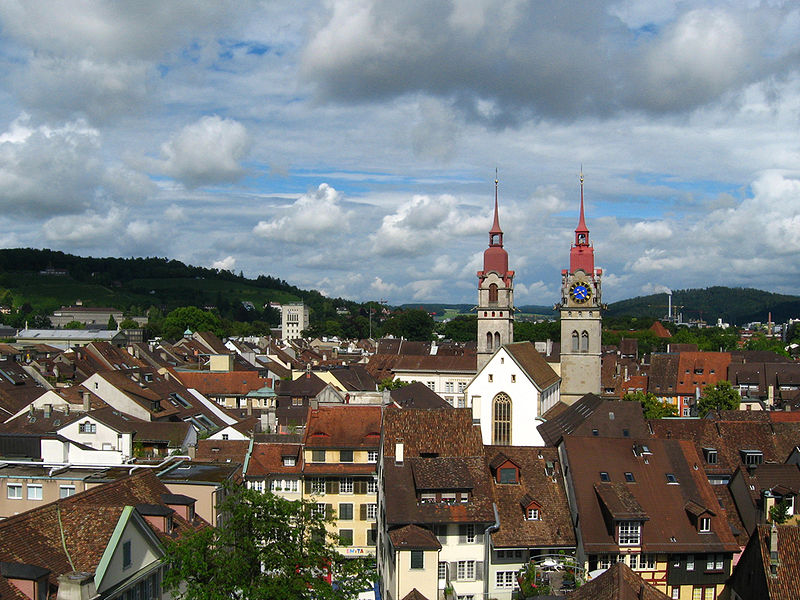
Flicking in a Winterthur Wonderland


The Picturesque City of Winterthur

Firstly I apologise for a such a poorly punned title. I did consider alternatives, but the play on Hot Chocolate’s ‘It started With a Kiss’ just wouldn’t work. ‘It started with an offer of a free Subbuteo team in a football magazine’ just doesn’t quite cut it.

So what am I going on about? Subbuteo! Despite being aware of Subbuteo from a very early age, being more into cricket than football meant I was more obsessed with obtaining Test Match than any flick-to-kick related products (and for £7.99 from Goldies toy shop, Test Match would be mine – replete with signed photo of the then England team... Botham, Gower et al. Now all that was required was some friends to play with... oh well, back in the box!)

As mentioned elsewhere on this blog, I had seen lots of Subbuteoitems in the windows of the toy shop in town, but even when I first became beholden to football, it still never appealed. It just seemed way too nerdy and serious. Yes they had lovely shiny trophies, but one didn’t need to love Subbuteo to desire those. I'd already dipped my toe into the world of table football a few months earlier when I purchased an all white team from the bargain bin at that same toy shop, but other than drawing my own kits on the blank plastic kit canvas, I still wasn't really getting it.

Two factors combined to change my stance:
  1. There were pretty much no other football toys out there at the time (Striker had disappeared a few years earlier and wouldn’t be available again until the '90s)
  2. An offer of a free Subbuteo team in Shoot! Magazine.

Yes, a FREE Subbuteo team! Which one would I get? As the advert clearly stated, ‘You could even get your favourite team!’ The excitement!!! 
The form was filled in, the requisite Stamped Addressed Envelope (how I miss that phrase) included and the standard 28 days for delivery was waited. Finally, one day after school, a package had arrived. A package that had seen better days by the look of it; my SAE a shadow of its former self. Whether it had suffered some rain damage followed by a letterbox-induced shredding or had just been used as a football for the posties at the local sorting office I shall never know. Nor indeed did I care for I was possibly about to embark on my full-on Subbuteo journey. I tore open the parcel, excitement building... who could it be, who could it be???

Well... you know the answer to that. Kinda gave it away in the title, really.

So...Winterthur... Who???

According to Wikipedia, Winterthur (German pronunciation: [ˈvɪntərtuːr], English: /ˈvɪntərtʊər/) is a city in the canton of Zurichin northern Switzerland. It has the country's sixth largest population estimated at more than 100,000 people.

So there you have it. Furthermore, FC Winterthur play in the Swiss Challenge League, the second highest tier of Swiss football. They play at the Schützenwiese Stadium.

Their home colours are all red. Only, they weren’t back then. Their home colours were white shorts and socks and white shirts with, if the Subbuteo figure painters are to be believed, three vertical gashes to the upper body. I’m assuming they were supposed to be uniform stripes, but the ones on my figures definitely looked like the result of some coordinated machete attack. Guess that would explain the blank stares on their plastic faces. The pic below is from an eBay listing (not mine - I’m holding on to my beloved Winterthur!) Mine came in more modern Subbuteo packaging (landscape layout, not vertical), but the figures are identical.

The Walking(?) Wounded

I now had two complete teams and, along with some cheap balls from the same bargain bin as before, could fully immerse myself in the murky waters of Subbuteo. Now all I needed was a pitch...and maybe some corner flags...and obviously a ref and linesman. A scoreboard would be quite useful too. Oh dear. In one fell swoop my interest had gone from passing to 'collector'. 0 to Geek in under 5 seconds...

And so yet another expensive pastime came into existence. One I shall delve into in greater detail in future, but for now, Merry Christmas people of Winterthur... and please, get to a hospital – those wounds need serious attention!
You have read this article Advert / Magazines / My First / Shoot / Subbuteo / Winterthur with the title Magazines. You can bookmark this page URL https://couplesfootballstadium.blogspot.com/2011/12/flicking-in-winterthur-wonderland.html. Thanks!
Monday, December 5, 2011

World Soccer: August 1971

Some time ago I decided to search eBay for old issues of World Soccer magazine, the much-loved football magazine, now in its 51st year. I wasn’t sure how many I’d find (if any at all) but I’m pleased to report there were quite a few to choose from, one of which was from the month and year of my birth.

And so it was that I purchased the magazine in question and installed it in my personal collection of football memorabilia. What’s curious to note in this printed snapshot of the global game from 1971 is that this was unquestionably a time of arrivals and departures.

Red Devil Frank

Inside we heard from reporter Eric Thornton on the appointment of Frank O’Farrell as manager of Manchester United, a move which was looked upon as something of a gamble on the part of the Old Trafford club. Having led Leicester City to the Division Two title, he replaced Wilf McGuinness in the United hot seat, and it was suggested by Thornton that his football experience at all levels of the game would probably see him in good stead. As it turned out, his first season there wasn't bad, but his second started badly and he was dismissed from his post only 18 months after he'd first arrived.

Don Howe, understudy to manager Bertie Mee at Arsenal, was on his way out of Highbury to take charge at West Bromwich Albion. What made this something of a notable story at the time was the fact that his predecessor at The Hawthorns, Alan Ashman, heard about his sacking well after most of the British public. The story was leaked from Highbury and soon appeared in national newspapers while Ashman was enjoying a holiday in Greece.

Pele to Europe?

Leaving the international scene was none other than Pele, as reported by Roger MacDonald in ‘World Diary’. Pele’s playing career with Brazil had come to an end in a recent friendly against Yugoslavia, but it was his club career at Santos that had come under the spotlight in the summer of 1971. Newly-formed French club Paris Saint-Germain were said to be offering the World Cup legend around £680,000 to play for them at the time, but Pele was in no mood to switch allegiances having already turned down similar offers from Juventus, Inter and Real Madrid. How ironic to think of PSG buying their success in such a way...

Also retiring - this time from football altogether - was Spanish legend Francisco Gento. Norman Cutler reported that his departure from the club where he'd become such a popular captain and outside-left was strangely muted. His last match was the European Cup Winners Cup Final replay against Chelsea in Athens that year, after which Real simply released a statement showing which players would not be retained for the following season. Gento's name was on it, and that was all that was said.

As it is, Gento had not been at his peak for some time due to injury problems and the Bernabeu club had finally decided to release the Spanish international. Rightly enough, he was granted a much-deserved testimonial some time later, thereby allowing Real's fans the chance to give him a proper send-off.

World Cup '74

Elsewhere in the August '71 issue of World Soccer, there was the full draw for the qualifying competition of the 1974 World Cup. There had been a record 98 entrants for the qualifiers and with only 16 places available in the Finals, the South Americans were upset at only getting three of them - so much so that they staged a temporary walk-out at the draw when they hadn't been allocated the four spots they'd asked for. As it is, they were lucky - the 24 competing African countries were fighting over only one place, something Joao Havelange would seek to improve during his FIFA presidency.

Eric Batty, meanwhile, bemoaned the lack of imagination at the recent handing out of the Footballer of the Year and Manager of the Year awards. Both prizes went to Arsenal after their double-winning season; Frank McLintock and Bertie Mee being the respective recipients. Batty argued that TV, the media and popular press had been caught up in the wave of universal appreciation for The Gunners' achievements at the expense of more deserving subjects. In Eric Batty's view, players like Colin Bell, Martin Peters and Ralph Coates might have been better placed to win the player's award.

In other news...

In this issue, we also heard about Canada's struggle to draw decent home crowds for their international matches, the growing interest in soccer over in Texas - contrasted starkly with the lack of goals and excitement in the NASL, and the introduction of a new competition called the UEFA Cup (a replacement for the Inter-Cities Fairs Cup won by Leeds United that summer).

Eric Batty was also on hand with a player profile on a new young talent called Johan Cruyff. The Ajax centre-forward had already caught the eye in a European Cup tie against Liverpool in 1966 by scoring one goal in the 5-1 home leg in Amsterdam and both for Ajax in the 2-2 return leg at Anfield. "If one man personifies the new standards of Dutch soccer, that man is surely Johan Cruyff" commented Batty.

Finally, Andrew Dettre reported on a tour of Australia that had recently been undertaken by an English FA representative squad. Though the players returned with a 100% success rate on the field, the tour itself was deemed far from satisfactory, largely due to the wealth of unknown names making up the squad. Big crowds failed to materialise at most of the nine matches leaving the Australian FA with far less money than they hoped for to fund a world tour for their own national side.

Front cover  (top): Italian champions Inter walking out onto the field at Selhurst Park to play an Anglo-Italian Cup match against Crystal Palace.

Back cover (right): Team picture of Blackpool, winners of the Anglo-Italian Cup in 1971.
You have read this article 1971 / Magazines / World Soccer with the title Magazines. You can bookmark this page URL https://couplesfootballstadium.blogspot.com/2011/12/world-soccer-august-1971.html. Thanks!